
Being a sound recordist on a film set means more than just pressing the record button. It’s about being a part of a team in a fast-paced environment, equipped with a large set of tools, with the ability to problem solve and be effective when asked to. Having recorded more than 10 short films, on this blog, I will analyse the essential tools and knowledge a sound recordist must acquire to carry out a successful location recording session.
Preparation and Gear
Before shooting, it’s essential to have a read through the scene’s script. Asking for the script will not only make you look professional by showing interest in the project but will also inform you about the actor’s performance and the film’s location. These considerations will help identify the dynamics and external parameters to set the levels of the recorder accordingly to avoid distortion (if the actors are screaming during the performance) and to grab a boom mic cover ‘dead cat’ (in case there’s a strong wind on set).
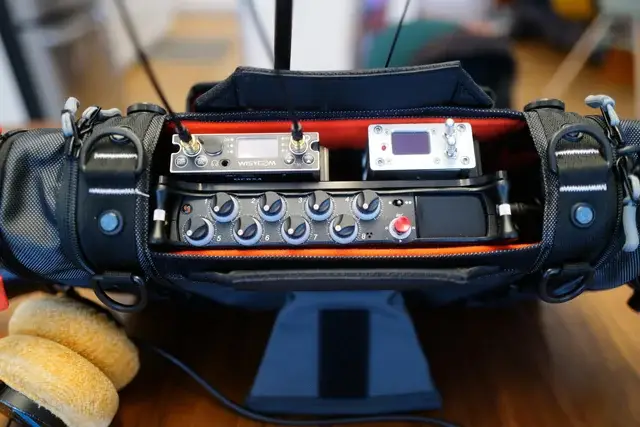
A typical industry standard gear arsenal should include a six-channel Sound Devices recorder MixPre-6 II (famous for their high-quality pre-amps), a Sennheiser MK416 condenser shotgun mic, 2-3 pairs of Sennheiser G4 lavalier mics, 1 V mount battery for optimum battery autonomy, Tentacles timecode generator, carbon boom pole and a tools bag including lavalier stickies-covers.
Setting Up and Miking the Actors
When arriving on set there is a setup hierarchy that needs to be followed so everything will run smoothly when shooting. Along with checking connections and battery levels, the lavalier mics’ frequency bandwidths need to be adjusted to make sure there will be no interference from nearby radio systems when transmitting (especially when close to broadcasting facilities or airports!). Adjusting each preamp individually is also important as the boom mic has a lower frequency response and might need a low-cut filter due to sound pollution (especially when shooting near construction sites). Moreover, syncing the timecode generator with the camera is vital to ensure seamless synchronisation for post-production.
Using lavs to mic the actors also needs experience and finesse. Including these mics in play can be challenging. You need to make sure they are placed close to the actor’s sternum (to record the low end) as well as being undetected from the frame while not making the actor wrapped in cables. An effective way of hiding them is under clothing which demands good communication with the actors to make them feel comfortable to clip the mic in their clothing.
Coordination with Crew and Further Challenges
Constant communication is crucial on set and understanding the shot setup is important. By anticipating the camera movements, through discussion with the cameraman, you can coordinate the mic placement accordingly, so it won’t be captured by the camera ensuring it records the best sound quality by being as close to the actors as possible. Another tip for that is to pay attention to the focus puller’s screen to see if the boom is out of frame. Additionally, it is also important to be fast on set to archive the recordings properly separating them according to the scenes, shots and takes to be tidy and ready to be used in post.
To conclude, location recording is a job that requires a blend of technical knowledge, adaptability and collaborative skills. It comes down to a thorough understanding of sound equipment, seamless communication and the ability to set and use the equipment according to the shooting’s needs.